Oct 13, 2026CNC Machining Tips
Brass CNC Machining: Alloys, Machinability and When to Specify It
Brass and bronze alloys for CNC machined parts — machinability, corrosion resistance, finish options and when brass beats aluminum or stainless.
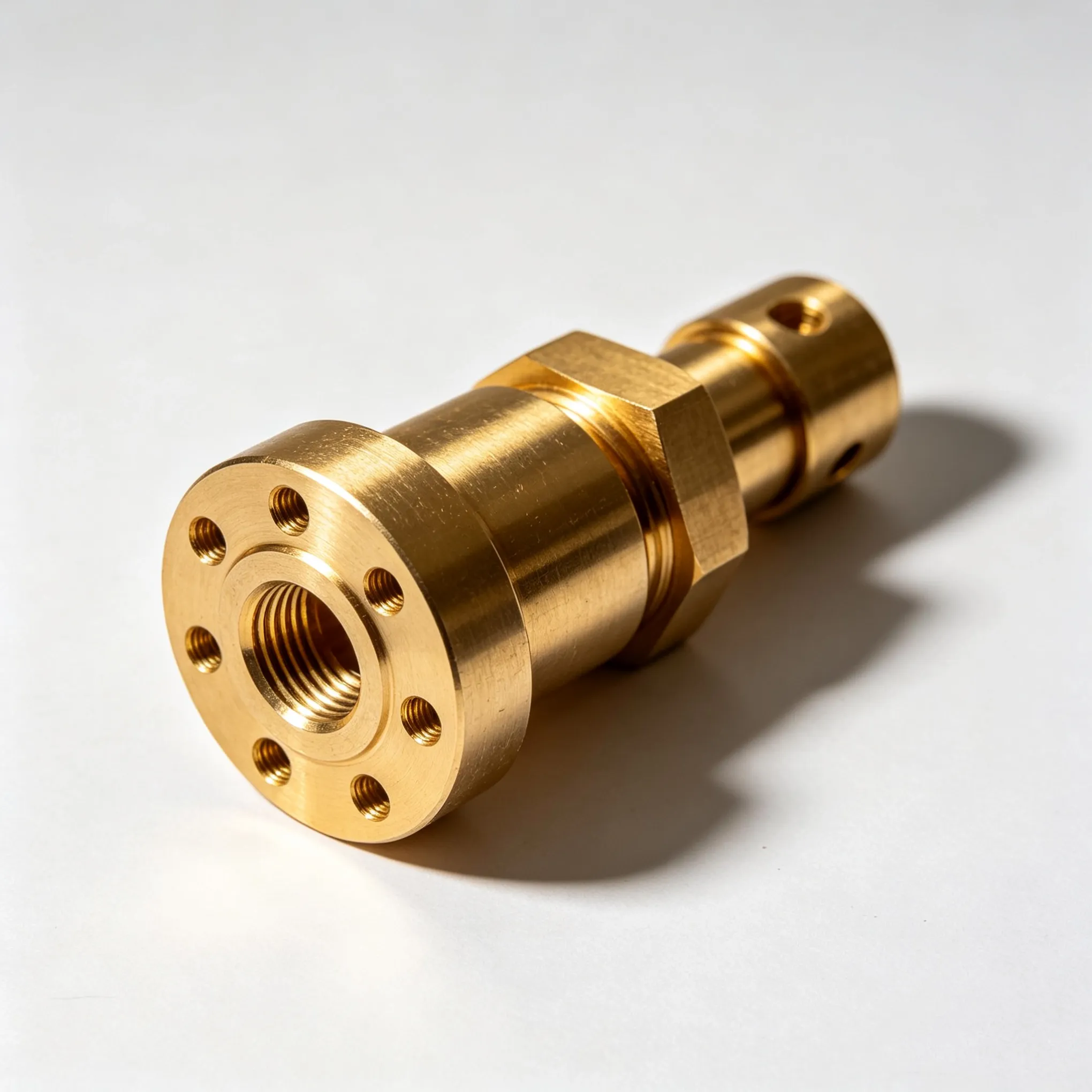
Brass is the alloy machinists reach for when a part needs to come off the machine quickly, cleanly and conductive. For buyers and design engineers, the real questions are narrower: which brass alloy, and when does brass genuinely beat aluminum or stainless steel?
This guide covers the brass and bronze grades common in CNC work, why they machine so well, the applications where each earns its place — and the cases where another material wins.
Key takeaways
• C36000 free-cutting brass carries the highest machinability rating of any common metal (100) — threads, thin walls and fine finishes come off the machine ready to use.
• Specify brass for conductivity, corrosion resistance and decorative appearance; specify bronze for bearings and wear surfaces.
• Brass costs more per kilogram than aluminum but often less per finished part at small volumes, because it machines roughly twice as fast.
The brass family in CNC work
C36000 — free-cutting brass, the default
This is the alloy behind the phrase "machines like brass." It produces short chips, holds an excellent surface finish straight from the tool, and supports the tightest standard tolerances — ±0.05 mm as a working band, better on selected features. When a drawing says "brass" without a grade, the quote is usually built on C36000. Typical parts: fittings, connectors, inserts, turned components, valve bodies, instrument hardware.
C26000 — cartridge brass
Higher copper content (70/30) and no lead addition. Better corrosion resistance and excellent cold-working behavior, at the cost of slightly slower machining. It is chosen when the part will be formed, soldered, or needs a lead-free profile: electrical components, drawn shells, radiator parts.
C46400 — naval brass
Tin-bearing brass with markedly better resistance to seawater and marine atmospheres — hence the name. It is the grade for marine hardware, pump components and anything exposed to splash, spray or steam.
Bronze — C93200 and C95400
When the part is a bearing or a wear surface, bronze is the family to pick. C93200 (bearing bronze) machines well and slides against steel with low friction: bushings, thrust washers, worm gears. C95400 aluminum bronze is tougher and more corrosion-resistant for heavy-duty bushings and pump parts. Bronzes machine slower than brass — budget accordingly.
Why brass machines so well
On the standard machinability scale, free-cutting brass defines the reference point at 100 — well above the stainless steels that buyers usually compare it against (303 sits around 78, 316 around 36). Lower cutting forces mean less tool wear, shorter cycle time, and a surface that often needs no finishing at all. Threads cut clean and hold their class; thin walls stay stable; small features survive turning and milling without chatter.
When brass beats aluminum and stainless
Electrical and electronic parts
Connectors, pins, contacts, terminals and RF housings are brass underneath almost everywhere you look. Brass resists corrosion at contact surfaces better than aluminum, solders easily, and accepts nickel, tin and gold plating cleanly — a combination no other common metal offers at the price.
Fluid handling and corrosion
Fittings, valves and manifolds in water, steam and marine service (naval brass at the harsh end of that range). Aluminum needs anodizing for comparable protection; stainless resists more but machines slower and costs more for small parts.
Appearance and decorative parts
Polished brass reads as quality: instrument bezels, architectural hardware, consumer products. It can be left bare, lacquered against tarnish, or plated for color — and even an unfinished machined surface looks intentional.
Bearings and sliding wear
Bronze outlasts steel-on-steel in low-speed sliding contact and tolerates marginal lubrication — which is why bushing stock is bronze by default. If your part rotates, slides or pivots, bronze is the starting recommendation.
When brass is the wrong call
• Weight-critical parts — brass is dense (about 8.5 g/cm³ against aluminum's 2.7), so a brass part weighs roughly three times its aluminum equivalent.
• High-load structures — steel and 7075 aluminum carry far more stress per unit of cost and weight.
• High-volume cost pressure — aluminum material is cheaper and machines well; at volume it wins.
• Aggressive water chemistry — free-cutting brass can dezincify in certain waters; specify naval brass or bronze instead of ignoring the risk.
Finishes and tolerances for brass parts
Brass needs less finishing than most metals. As-machined surfaces are already smooth and bright; from there, the common options are mechanical polishing, brushed textures, clear lacquer for tarnish resistance, and plating (nickel, tin, chrome) when wear resistance or a color change is required. On tolerance, ±0.05 mm is a routine working band in brass, and its stiffness lets features like thin flanges and fine threads hold size better than the same geometry in aluminum.
How brass part pricing actually works
Brass quotes surprise buyers in both directions, so it helps to know the three inputs. First, material: brass stock costs roughly two to three times aluminum per kilogram, and bar stock is bought by length, so small parts rarely consume material efficiently. Second, cycle time: because brass machines fast and clean, the machining share of the price is unusually low — often the smallest of the three inputs. Third, finishing: many brass parts ship as-machined, which removes the third cost line almost entirely.
The practical result: at small and medium quantities, a brass part frequently prices below the same geometry in stainless steel and surprisingly close to aluminum — despite the higher metal cost. The comparison flips at volume, where aluminum's cheaper stock takes over.
Practical notes for specifying brass parts
Specify the alloy, not just "brass" — C36000, C26000, C46400 or a bronze grade, because the choice changes machining, corrosion and available finishes. State whether the surface is functional or cosmetic early; it decides whether you need polishing or a protective lacquer. And if the part carries electrical current, say so in the RFQ — contact surfaces may need plating or a specific finish that is much cheaper to plan at quoting than to retrofit.
Get brass parts quoted properly
Send the drawing with the application context — contact, fluid, decorative or bearing — and specify the alloy if you already have one. ProLathe machines brass, bronze, aluminum, stainless steel and engineering plastics from prototype to small-batch production, with DFM notes and pricing back within 24 working hours. Send your drawing for a quote.