Oct 13, 2026CNC Machining Tips
Titanium CNC Machining: Grades, Machinability and Cost
Titanium grades for CNC machining — Grade 2 vs Grade 5 vs Grade 23, why titanium is expensive to machine, and design rules that keep the price down.
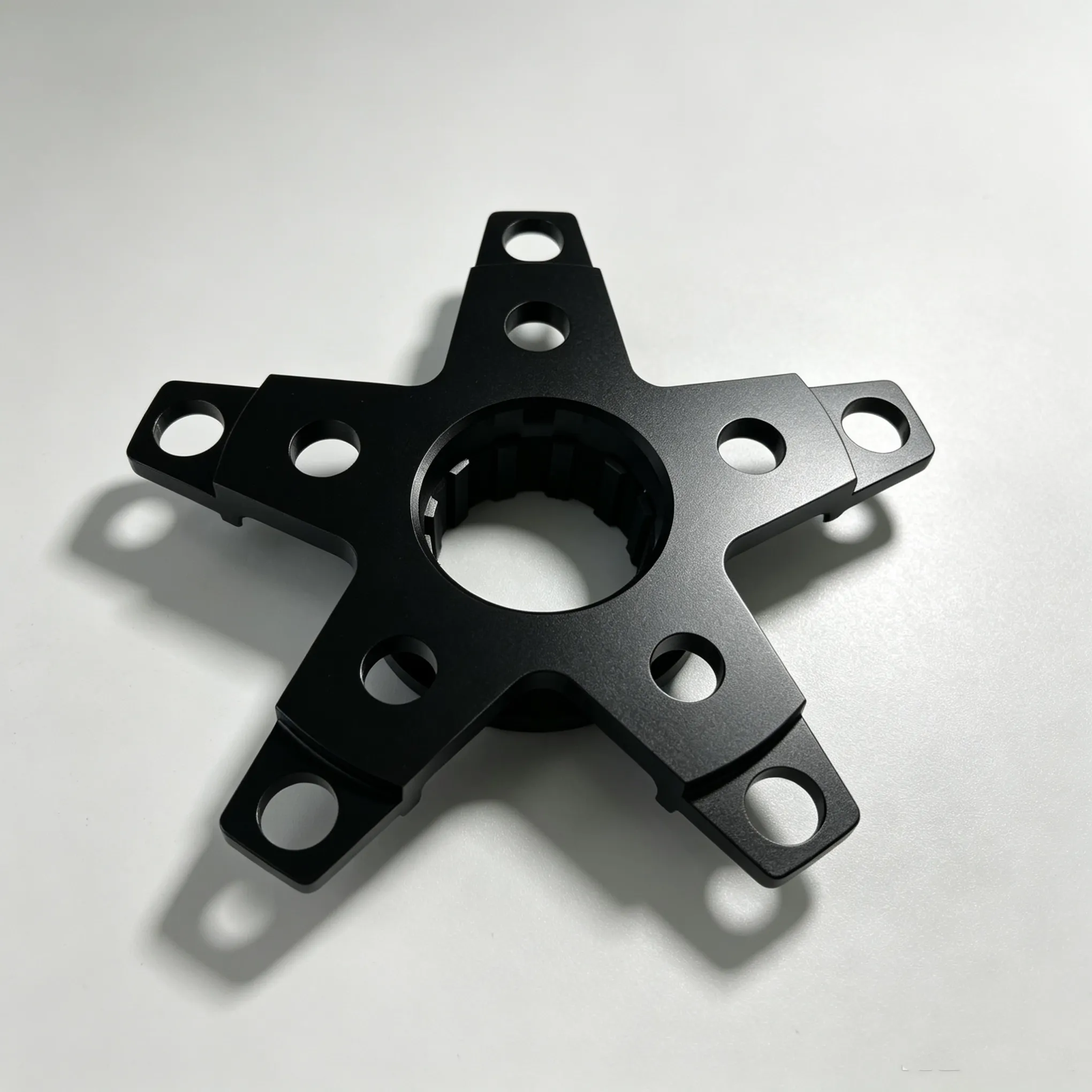
Titanium is specified when nothing else survives the job: aerospace brackets, medical implants, racing components, chemical processing hardware. It is also the metal that most often blows up a machining budget, because its cost structure is unlike anything else in a machine shop. This guide explains the grades you will actually encounter, why titanium cuts the way it does, and how to keep a titanium part affordable.
Key takeaways
• Grade 5 (Ti-6Al-4V) is the workhorse — roughly twice the strength of 6061 aluminum at similar weight; Grade 2 is the pure, softer, corrosion-focused option.
• Titanium machines roughly 5–10× slower than aluminum and consumes tooling faster — expect a machining-heavy price, not a material-heavy one.
• Most titanium parts stay affordable by designing for stiffness instead of adding material: thin walls are expensive in titanium, deep pockets and sharp internal corners especially so.
The grades you will encounter
Grade 2 — commercially pure titanium
The unalloyed grade: moderate strength, excellent corrosion resistance (including chlorides and seawater), excellent formability and weldability. It is used for chemical processing parts, marine hardware, heat exchangers and medical components where strength is not the driver. It machines more gently than the alloys and costs less.
Grade 5 — Ti-6Al-4V, the default engineering alloy
Aluminum and vanadium additions roughly double the strength of pure titanium while keeping the density advantage — around 4.43 g/cm³ against steel's 7.85. This is what "titanium" means in most drawings: aerospace structure, medical implants, high-performance automotive and motorsport parts, premium consumer products. It is also the grade most often quoted, and the one whose machining behavior drives cost.
Grade 23 — Ti-6Al-4V ELI
The same chemistry as Grade 5 with extra-low interstitial elements: better ductility and fracture toughness, which matters for surgical implants and cryogenic service. It costs more and machines similarly.
Grade 9 — Ti-3Al-2.5V
A middle-strength alloy with better formability, common in tubing and bicycle frames. Occasionally appears in machined fittings. It sits between Grade 2 and Grade 5 on both price and strength.
Why titanium is expensive to machine
Three properties define the machining experience. First, low thermal conductivity — heat from cutting does not leave through the chip or the part, so it concentrates in the cutting edge, and tool life drops accordingly. Second, chemical reactivity — at cutting temperatures, titanium tends to weld to tool edges, producing built-up edges and torn surfaces unless feeds, speeds and tooling are chosen carefully. Third, low elastic modulus — the material springs back, so slender parts and thin walls deflect and chatter where the same geometry in steel would be rigid.
The practical translation: slower cutting speeds, generous coolant, sharp tooling, and more planning per part. Cycle times on titanium run many times longer than the same feature in aluminum — the shop-rate share of the quote dominates the material share, which is the opposite of how buyers intuit the price.
Design rules that keep titanium parts affordable
• Design for stiffness where the load needs it — but avoid thin, unsupported walls; they chatter and force slow, cautious cutting.
• Generous internal corner radii. Sharp inside corners are hard in every metal; in titanium they are a cycle-time multiplier.
• Limit deep, narrow pockets — long tool reach with a springy material is the most expensive combination in the shop.
• Consolidate setups. Every re-fixture of a titanium part costs more than the same operation in aluminum, because the cutting window is narrower.
• Keep tolerances functional, not cosmetic — titanium holds ±0.05 mm routinely, but stacks of tight callouts multiply slow passes.
Finishes and post-processing
Titanium's natural oxide gives it corrosion resistance without any treatment, and many parts ship as-machined or bead-blasted (matte, uniform, removes tool marks). For medical implants and wear-critical parts, anodizing options matter: Type II anodize for color and wear marking, Type III (hard) for wear resistance, and in the medical space, specific anodizing per ASTM standards for implant identification and surface compatibility. Laser marking is common for traceability. Passivation is not used for titanium the way it is for stainless — the oxide forms on its own.
When titanium earns its price — and when it doesn't
Titanium is the right call when the part needs high strength-to-weight ratio, corrosion resistance that stainless cannot provide (chlorides, seawater, body fluids), or biocompatibility. It is the wrong call when the only goal is "strong and light" — 7075 aluminum delivers roughly 70% of titanium's strength at one-third the weight of steel and a fraction of the machining cost, and is right for the majority of weight-driven parts. The honest test: if neither corrosion environment, temperature, nor regulation forces titanium, an aluminum redesign is usually the more economical path to the same function.
How to compare a titanium quote against aluminum
When two quotes arrive — a titanium version and an aluminum version of the same drawing — resist comparing unit prices directly. Break the titanium quote down first. Material typically accounts for 20–35% of a titanium part price; the rest is machining time, tooling wear and inspection. In aluminum the proportions flip: material is a smaller share, and machining is fast and predictable.
Then ask the engineering question before the budget question: which functions actually require titanium? If the answer is one mounting interface or a corrosion-exposed face, designers sometimes relocate that requirement (a titanium insert, a coated aluminum body, a stainless fastener) and keep the bulk of the part in a cheaper metal. Mixed-material assemblies are normal in aerospace for exactly this reason, and they routinely cut part cost by more than half without losing function.
Inspection and documentation for titanium parts
Certificates and traceability
Titanium stock is expensive enough that traceability is a standard expectation: mill certificates with heat numbers, and for aerospace or medical supply chains, full chain-of-custody documentation. If your program requires it, state it in the RFQ — it changes sourcing and lead time, and it is far cheaper to include at quotation than to reconstruct afterwards.
What to inspect
For structural titanium parts, dimensional inspection against the drawing is the baseline; add material certification verification and, where the specification calls for it, surface condition checks (alpha case removal on Grade 5, for example). For medical work, inspection plans usually follow the customer's quality agreement — share it with the RFQ so the quote includes the right level of documentation.
Lead time reality
Titanium parts take longer than aluminum throughout the chain: material sourcing (grades and sizes are not always on the shelf), machining (slower, more conservative cutting), finishing (anodizing specialty shops run their own queues) and inspection. Plan on the lead time from the quotation, not an optimistic rule of thumb, and keep a week of buffer if the part is on a critical path.
Cost, lead time and how to quote titanium parts
Expect titanium parts to cost several times their aluminum equivalents — mostly machining time, with material running two to four times aluminum by kilogram depending on grade. Lead time stretches for the same reason. The way to get a realistic number is to send the drawing plus the environment and load case, and ask for both titanium and an aluminum alternative in the same RFQ — the comparison frequently changes the requirement. ProLathe machines titanium grades 2, 5 and 23 alongside aluminum, stainless and engineering plastics, with DFM notes and pricing back within 24 working hours. Send your drawing with the operating conditions and we will quote both routes.